
"Arabian Bourbon"
500 article(s) found

It is no longer the hometown of bourbon Arabian coffee beans, Reunion.
Is no longer the hometown of bourbon Arabica coffee beans. In 1715, the first coffee trees (about 40) were transported from the Yemeni port of Moka to La Runion, but unfortunately only two survived. By 1719, coffee plantations had begun to flourish and the first coffee beans were sold. Over the next few years, the government took a hard measure: the islanders, whether black or white, had to

What is the type of Arabian coffee beans grown in pink bourbon?
Arabian coffee beans bourbon is almost all round beans, beans are smaller than tin card, ripe later, but the yield is 30% more than tin truck. It is suitable for growing above 1200 meters above sea level, and its flavor is obviously more prominent than those below 1000 meters, but bourbon has a disadvantage that it will rest for a year as a result. The round bourbon is full of vitality and has better resistance to rust leaf disease than iron pickup, but the wind

Arabian coffee with dry citric acid flavor
[Caturra] A mutant of Kaddura species Bourbon. It was first found in Brazil and began to be planted for commercial use in Minas Gerais, Brazil in 1937. The taste is sour with lemon or citrus taste, but it is not as sweet as Typica and Bourbon in terms of sweetness, because the sweetness of Caturra depends on the number and dosage of fertilizer applied by the grower. It has high production capacity, but it is necessary to maintain production capacity.
The hometown of bourbon Arabica coffee beans, Reunion.
Is no longer the hometown of bourbon Arabica coffee beans. In 1715, the first coffee trees (about 40) were transported from the Yemeni port of Moka to La Runion, but unfortunately only two survived. By 1719, coffee plantations had begun to flourish and the first coffee beans were sold. Over the next few years, the government took a hard measure: the islanders, whether black or white, had to

Introduction to the grinding scale of the flavor description method for the aroma-rich Arabian coffee bean manor.
The aroma-rich Arabian coffee bean manor area flavor description processing method grinding scale introduction from the collection of coffee beans to processing into finished products, coffee has been kept free from soil and other sundries to ensure taste and quality; second, graded collection: since coffee beans are not uniform and mature, coffee beans of the same level are collected centrally rather than mixed together
How many varieties are there in Arabica beans? are Jamaica Blue Mountains and Kona Arabian varieties?
Do you have different kinds of Arabica coffee beans? Arabica coffee beans have a large family and grow dozens of varieties. Some of these varieties are unique in specific coffee-growing areas, while others are grown in many parts of the world. Here are some of the most common types of Arabica coffee. Typica:Typica is considered to be one of the earliest varieties of coffee, and today it is still

Description of Bourbon Coffee Bean Flavor introduction of Grinding scale production area treatment method
Description of the flavor of bourbon coffee beans the two best varieties of Arabica coffee are Tippica Coffee and bourbon Coffee. But many other varieties have come a long way. Its Chinese Coffee Coffee is grown in Brazil and Colombia, Mondo Coffee, Tiago Coffee, San Ramon Coffee and the famous Jamaican Blue Mountain Coffee. Arabian coffee trees are usually larger.
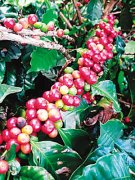
Reunion is no longer the hometown of bourbon Arabica coffee beans.
Is no longer the hometown of bourbon Arabica coffee beans. In 1715, the first coffee trees (about 40) were transported from the Yemeni port of Moka to LaRunion, but unfortunately only two survived. By 1719, coffee plantations had begun to flourish and the first coffee beans were sold. Over the next few years, the government took a hard measure: the islanders, whether black or white,

The hometown of bourbon Arabica coffee beans, reunion coffee beans in Yemen
Is no longer the hometown of bourbon Arabica coffee beans. In 1715, the first coffee trees (about 40) were transported from the Yemeni port of Moka to LaRunion, but unfortunately only two survived. By 1719, coffee plantations had begun to flourish and the first coffee beans were sold. Over the next few years, the government took a hard measure: the islanders, whether black or white,

Introduction to the flavor and taste characteristics of Arabian coffee
Grades of Arabica coffee beans Ethiopian coffee: Ethiopian washed coffee Yega Chuefei G1 G2 Sidamo (Yirgacheffe, Sidamo) the highest grades are level 2 and 3 (G2, G3), while sun-processed coffee in eastern Ethiopia is mostly grade 4 or 5 (G4, G5). In many cases, level 4 coffee is marked as level 5 in order to reduce taxes. Now

Introduction to the characteristics of grindability of Bobang coffee beans grown in Yunnan by describing the flavor of small grains
Yunnan Coffee Bean introduces two classic high-quality coffee varieties, Typica and Bourbon, which are the main cultivated varieties in Yunnan. In 1991, Katimo Catimor series varieties were introduced from Kenya (with stronger anti-virus ability and higher yield). A variety of Arabian species (also known as small seed species). Because the morphology and habits of the two varieties are similar, the two

Reunion was once home to bourbon arabica coffee beans coffee country
Fine coffee beans must be excellent varieties, such as the original bourbon species, mocha species, tipica species, these species produce coffee beans with unique aroma and flavor, far from other species can compare, but the relative yield is lower, in recent years in pursuit of disease resistance and yield improvement, there have been many improved species, such as Kenya a large number of high-yield rural 11 species,

Coffee producing countries introduce high-quality coffee beans
Bolivian coffee variety: Arabian coffee production: 150.000 bags with snow-capped mountain terrain, vast plateau and tropical rain forest, Bolivia has ideal coffee production conditions. More than 90 per cent of the coffee produced in Bolivia is produced in high-temperature and humid climates, with elevations of 500 to 1600 metres above sea level in the tropics of La Paz. Another very important production area
Global coffee producing area-Reunion
In 1715, the first coffee trees (about 40) were transported from the Yemeni port of Moka to LaReunion, but unfortunately only two survived. By 1719, coffee plantations had begun to flourish and the first coffee beans were sold. Over the next few years, the government took a hard measure: the islanders, black and white, had to plant 100 coffee trees a year. The law of 1723
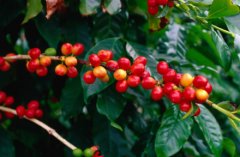
The coffee producing area of Reunion.
In 1715, the first coffee trees (about 40) were transported from the Yemeni port of Moka to LaReunion, but unfortunately only two survived. By 1719, coffee plantations had begun to flourish and the first coffee beans were sold. Over the next few years, the government took a hard measure: the islanders, black and white, had to plant 100 coffee trees a year. The law of 1723

The characteristics of Reunion Coffee
In 1715, the first coffee trees (about 40) were transported from the Yemeni port of Moka to LaReunion, but unfortunately only two survived. By 1719, coffee plantations had begun to flourish and the first coffee beans were sold. Over the next few years, the government took a hard measure: the islanders, black and white, had to plant 100 coffee trees a year. The law of 1723

Global coffee producing area-Reunion
In 1715, the first coffee trees (about 40) were transported from the Yemeni port of Moka to LaReunion, but unfortunately only two survived. By 1719, coffee plantations had begun to flourish and the first coffee beans were sold. Over the next few years, the government took a hard measure: the islanders, black and white, had to plant 100 coffee trees a year. The law of 1723

Coffee Origin Coffee characteristics Coffee treatment method
Arabica (Arabica): also known as Arabian variety, named because it is native to the Arabian Peninsula (one said to be native to Ethiopia), its caffeine content is 1% Muth1.7%, only half that of Robbda, so it is also healthier. Its branches include Picard, Bourbon, Jamaica Blue Mountain and so on. Arabica grows between 900m and 2000 m above sea level, and is hardy and suitable.

Introduction of the Origin of the most traditional Arabica Coffee
Arabica (Coffea arabica) is the most traditional Arabica coffee variety. Originally from East Africa, coffee was monopolized by the Arab world for a long time before the 15th century, so it was called Arabian coffee by Europeans. It turned out that all the commercial coffee in the world were small grains, but it was only at the end of the 19th century that growers began to look for other resistance to a large-scale disease.

High-quality coffee bean producing countries introduce Reunion's coffee
In 1715, the first coffee trees (about 40) were transported from the Yemeni port of Moka to LaReunion, but unfortunately only two survived. By 1719, coffee plantations had begun to flourish and the first coffee beans were sold. Over the next few years, the government took a hard measure: the islanders, black and white, had to plant 100 coffee trees a year. The law of 1723